
Trailer Brake Gain: How to Set It, and What “Service Trailer Brake System” Means
Gain is the setting on your brake controller that decides how hard the trailer's brakes bite when you press the pedal. Too low and the trailer pushes the truck. Too high and the trailer wheels lock and skid. There is no single correct number — gain depends on the load, so it is a setting you adjust rather than one you set once and forget.
What gain actually controls
An electric trailer brake works by sending current to an electromagnet at each wheel. More current means more braking force. The gain setting is simply how much current your controller sends when you brake. It is a percentage of maximum output, not a measure of how quickly the brakes come on.
That distinction matters, because most controllers have a second setting people confuse with gain. Gain is how hard. The other setting — often called boost, sensitivity, or aggressiveness — is how quickly the controller ramps up to that force. If your trailer brakes feel abrupt rather than weak, boost is usually the setting to change, not gain.
How to set gain properly, in five minutes
Do this every time the load changes significantly. A trailer loaded with two tons of gravel needs far more gain than the same trailer running empty.
- Hitch up and load the trailer as you will actually tow it. Setting gain on an empty trailer and then loading it is the most common mistake.
- Find a flat, empty stretch — an empty lot or a quiet straight road with nobody behind you.
- Drive at about 25 mph. Fast enough to be meaningful, slow enough to be safe.
- Apply the manual lever only — the slide or paddle on the controller that operates the trailer brakes without the truck's. Do not touch the brake pedal. This isolates the trailer.
- Adjust and repeat. If the trailer barely slows you, raise the gain. Keep raising it until you feel the trailer wheels just begin to lock or skid, then back it off slightly. That point — firm braking just short of lockup — is your setting for this load.
You should end up with the trailer braking firmly and in a straight line, with no skidding and no sensation of the trailer shoving the truck from behind.
Reading the symptoms
- Trailer pushes the truck when you brake — gain too low. The truck is doing all the work, which overheats truck brakes on descents.
- Trailer wheels lock or chirp — gain too high. A locked wheel has less grip than a rolling one, and it flat-spots tyres.
- Braking feels grabby right at the top of pedal travel — usually boost or sensitivity, not gain.
- Brakes fine empty, useless loaded — normal, and exactly why gain is a per-load adjustment.
- Trailer pulls to one side — not a gain problem. That is a mechanical or wiring fault at one wheel.
What "Service Trailer Brake System" means
This warning is the truck reporting that it cannot see a working trailer brake circuit. It is an electrical message, not a verdict on the brake shoes themselves. In rough order of likelihood:
- A dirty or corroded connector. The seven-way plug lives behind the bumper collecting road salt. This is the cause more often than everything else combined. Unplug, inspect, clean the pins, reseat firmly.
- A blown fuse on the trailer brake circuit in the truck's fuse box.
- A damaged wire where the harness flexes near the hitch, or a chafed run along the trailer frame.
- A failed magnet at one wheel, drawing no current or shorting.
- The controller itself — integrated controllers can fail, though they are the least likely item on this list.
The message often appears with no trailer attached, which is normal on some trucks and does not indicate a fault. It can also appear intermittently over bumps, which almost always means a connector or a chafed wire rather than anything internal.
A quick way to narrow it down
Check whether the brakes work at all using the manual lever with the trailer connected. If the lever does nothing, the fault is between the controller and the magnets — connector, fuse, wiring. If the lever works but the pedal does not activate them, the fault is more likely in the controller's connection to the truck's brake signal. That single test splits the problem in half in about a minute.
If you are wiring or re-wiring, our guide on how to wire trailer brakes covers the circuit end to end, and how to adjust trailer brakes covers the mechanical adjustment at the drum, which is a different job from setting gain.
Do you even need a controller?
If your trailer has electric brakes, yes — there is nothing else to operate them. Most states require brakes on trailers above a weight threshold, and those thresholds are lower than people expect, commonly in the low thousands of pounds. The rating that matters for the rule is the GVWR, not what the trailer happens to weigh today. Our guides on trailer brakes and what GVWR means cover how those thresholds are applied, and brake controllers explained covers choosing between proportional and time-delay units.
Trailers with surge or hydraulic brakes are different — they need no controller and no gain setting at all, because the coupler actuates the brakes mechanically as the trailer pushes against the tow vehicle.
Frequently asked questions
What gain setting should I use?
There is no universal number, and any specific figure you are given is a guess about a load nobody has seen. Set it by the 25 mph manual-lever test above, and reset it whenever the load changes materially.
Does gain need changing in the rain?
Yes, reduce it. Wet surfaces lock wheels at lower force. Many drivers keep a slightly lower setting for wet conditions and raise it back when dry.
Can too much gain damage anything?
It flat-spots tyres and accelerates lining wear, and a locked trailer wheel makes the trailer more likely to step out on a wet or loose surface. It will not damage the controller.
Why do my brakes work empty but not loaded?
Because gain is a fixed percentage of output, not an automatic response to weight. More load needs more braking force, so it needs more gain. This is the single most common reason people believe their trailer brakes are failing.
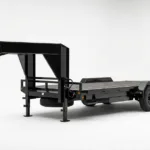
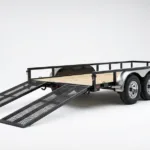
Every new trailer we deliver arrives with its brakes and lighting set up from the factory. Browse dump trailers, equipment trailers and gooseneck trailers, all with free delivery.