NEW
NEW
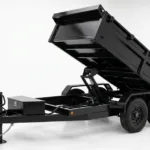
A dump trailer earns its keep on weight, not volume. A cubic yard of wet topsoil runs about 2,200 lb and gravel about 2,800 lb, so it is very easy to fill one by eye and be over its rating by the time you pull away. Work from the densest material you haul, add the trailer's own weight, and buy above that number.
CATEGORY RATING PLATE
DECK SIZES5x8 to 7x18
GVWR RANGE5,000 to 25,900 lb
PRICE FROM$4,500
DELIVERYFree
NEW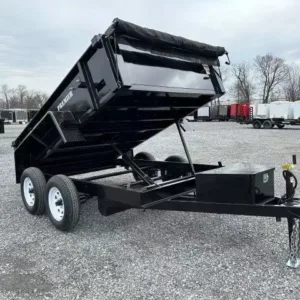 NEW
NEW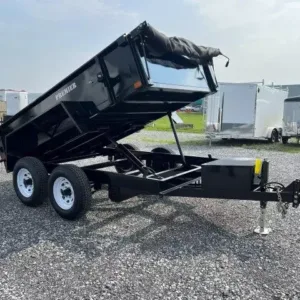 NEW
NEW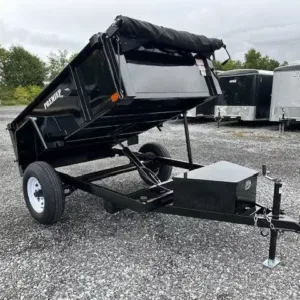 NEW
NEW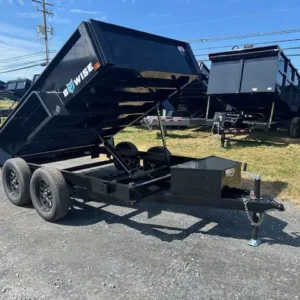 NEW
NEW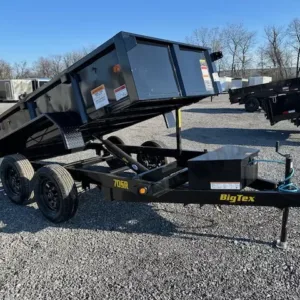 NEW
NEWBig Tex 5 x 10 Low Profile Dump Trailer Barn Doors
Original price was: $7,499.00.$6,499.00Current price is: $6,499.00.
View trailer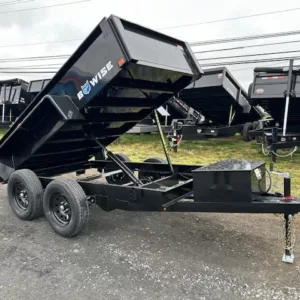 NEW
NEW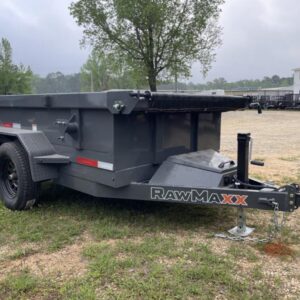 NEW
NEW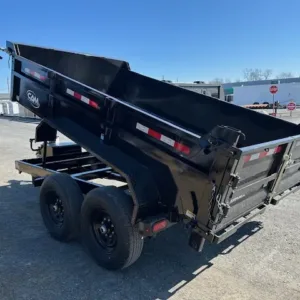 NEW
NEWCAM Superline 7 x 12 HD Low Profile Dump Trailer
Original price was: $11,499.00.$10,699.00Current price is: $10,699.00.
View trailer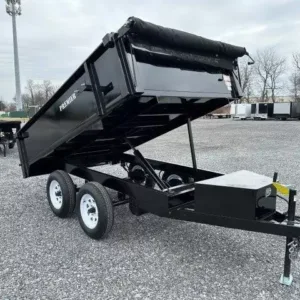 NEW
NEW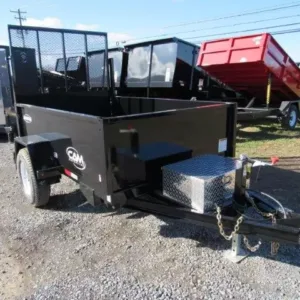 NEW
NEW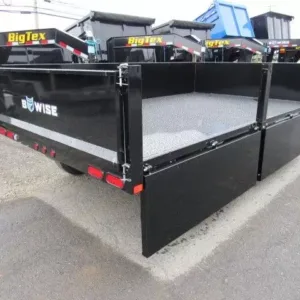 NEW
NEWBWise 7 x 12 Deckover Dump Trailer Fold Down Sides
Original price was: $8,999.00.$7,499.00Current price is: $7,499.00.
View trailerChoosing a dump trailer
Three decisions matter more than the rest, and they are not the ones most buyers start with.
1. Work from GVWR, not deck size
Your usable payload is the GVWR on the rating plate minus the trailer's own empty weight, and a dump trailer is heavy empty because of the hoist and the steel bed. A 14,000 lb GVWR unit weighing 4,200 lb carries about 9,800 lb, or roughly four and a half cubic yards of soil. Our guide on what GVWR means works the arithmetic through.
You will hit the weight limit before the bed looks full. A bed filled level with the sides with wet material is commonly over GVWR. Load by weight, not by eye.
2. The gate decides how you can actually use it
Barn doors swing open for dumping a whole load in one place. A spreader gate opens a controlled gap so material lays down in an even strip as you drive forward — that is what you want for gravelling a driveway. A combination gate does both and is the most flexible. Ramps stow underneath so the same trailer carries a mini excavator out and dumps material on the way back.
3. Hoist type follows the load
A single ram is simplest and cheapest and works well on shorter beds. A scissor hoist gives more lift force further through the stroke, which suits heavier loads. A telescopic cylinder reaches the steepest angle, which matters most for sticky material like wet clay.
What you need to tow one
Match your vehicle's tow rating to the trailer's GVWR, not its empty weight, and check payload separately — tongue weight at 12% of a loaded 14,000 lb trailer is about 1,700 lb, which is most of a half-ton's payload before anyone gets in. See what your vehicle can tow. At these weights brakes are required in practice everywhere, so you need a brake controller; read how to set brake gain before the first loaded trip.
Browse by specification
By capacity: 7K · 10K · 14K · 16K · 20K. By size: 6x10 · 6x12 · 7x12 · 7x14 · 7x16.
Related: equipment trailers if you mostly carry machines · gooseneck above bumper-pull weights · what a dump trailer is and what it costs.
COMMON QUESTIONS
Questions buyers ask about this type
Subtract the empty weight from the GVWR on the rating plate. A 14,000 lb GVWR trailer weighing 4,200 lb empty carries about 9,800 lb. Material density varies enormously, so wet gravel can be a third heavier than dry.
For household work and a long driveway, 7,000 lb GVWR is the usual entry point. For a landscaping round, 10,000 lb clears a day's spoil in one trip. For contractor work, 14,000 lb. Above that you are into gooseneck territory.
Not for the sizes most buyers choose, but combined vehicle weight ratings start to matter around 16,000 lb and above depending on your truck and your state. Check before you buy, not after.
If it has ramps and the machine is within the payload, yes. Check the machine's operating weight, not its bare weight, and confirm the ramps are rated for it separately from the trailer.
Many cycles on a healthy charged battery, and it recharges from the tow vehicle as you drive. The usual cause of a dead hoist is a trailer left all winter without a charge, not the pump.
The condition is stated on every listing and in the product data. Most of our dump trailers are new; used units are labelled as used.