
What Is a Travel Trailer? Sizes, Weights and Dimensions
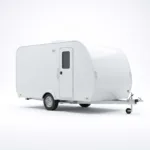
A travel trailer is a towable RV that hitches to a standard ball coupler on the back of a truck or SUV. Unlike a motorhome it has no engine, and unlike a fifth wheel it does not need a hitch mounted in the bed of a pickup. That combination — no engine to maintain, no special hitch, unhitch and drive away at camp — is why it is the most common RV on the road.
How a travel trailer differs from the alternatives
A fifth wheel connects to a hitch plate in a pickup bed. It tows more stably and offers more interior space per foot, but it requires a pickup with a bed hitch and cannot be towed by an SUV. A motorhome has its own engine and drivetrain, so you drive it rather than tow it — and you maintain a vehicle whether or not you are camping. A pop-up or folding camper collapses for towing, is far lighter, and trades interior comfort for that.
A travel trailer sits in the middle: real walls and a real roof, no engine, and a hitch most tow vehicles already have or can easily get. Once you arrive, you unhitch and your vehicle is free.
How big is a travel trailer?
Length
Travel trailers run from compact teardrops around 12 feet to large family units past 35 feet. The length quoted in a listing is usually the overall length including the tongue, which is the number that matters for campsite limits and for parking at home — not the interior floor length, which is shorter.
Many state and national park campgrounds cap site length, and the caps are lower than people expect. If you plan to use public campgrounds rather than private RV parks, check the limits in the parks you actually visit before you choose a length.
Width
Most travel trailers are about 8 feet wide — commonly 96 inches for full-size units, with smaller and lighter trailers around 7 feet. That is wider than your tow vehicle, which is why extended towing mirrors are worth fitting. Slide-outs add interior width when parked but do not change the towing width.
Height
Exterior height typically falls between 10 and 11 feet, and air conditioners, antennas and vents sit on top of that. Height is the dimension that causes the most expensive mistakes, because low bridges, drive-through canopies and garage doors do not negotiate. Measure your own trailer including everything on the roof, write the number down, and keep it where you will see it while driving.
How much does a travel trailer weigh?
Weight is where most buying mistakes happen, because there are several different numbers and the wrong one gets used.
- Dry weight (or UVW) is the trailer as it left the factory. No water, no propane, no gear, and often no options that were fitted afterwards. It is the number most likely to be quoted and the least useful for planning.
- GVWR is the maximum the loaded trailer is allowed to weigh. This is the number to match against your tow rating.
- Cargo carrying capacity is GVWR minus dry weight — what you can actually load.
- Tongue weight is the downward force at the hitch ball, typically 10 to 15 percent of the loaded trailer weight, and it counts against your vehicle's payload, not just its tow rating.
Water is the item people forget. Fresh water weighs roughly 8.3 pounds per gallon, so a 40-gallon tank adds well over 300 pounds. Fill your tanks at the campground rather than at home where you can.
Always plan against GVWR rather than dry weight. A trailer with a dry weight comfortably inside your tow rating can exceed it once loaded. Our guide on what GVWR means on a trailer explains why the rating plate is the number that counts.
What you need to tow one
Match your vehicle's tow rating to the trailer's GVWR, and check payload separately for tongue weight. Larger travel trailers usually need a weight-distributing hitch, which spreads tongue weight across both axles of the tow vehicle and dramatically improves how the combination handles. Many manufacturers require one above a certain tongue weight for the tow rating to apply at all.
Sway control is worth having on any long trailer. A tall, flat-sided box is affected by crosswinds and by the pressure wave from passing trucks in a way a low utility trailer never is. Our guide on how to tow a trailer safely covers loading, weight distribution and what to do if sway starts.
What is inside
Even compact travel trailers usually include a sleeping area, a kitchen with a sink and cooker, a dinette, and a wet bath. Larger units add separate bedrooms, bunk rooms, slide-outs that expand the living area when parked, and outdoor kitchens. Floor plans matter more than square footage — a bunkhouse layout and an open-plan couples layout at identical lengths are entirely different trailers.
Three tanks run the plumbing: fresh water in, grey water out from sinks and shower, and black water from the toilet. Knowing their capacities tells you how long you can camp without hookups, and it is a more practical measure of a trailer than its length.
Frequently asked questions
Can an SUV tow a travel trailer?
Many can, within limits. Check both the tow rating and the payload, since tongue weight and passengers both consume payload. Lighter trailers are built specifically for this, but confirm against your own vehicle's plate rather than a brochure figure.
Do travel trailers need a title?
Titling and registration requirements vary by state. New units ship with a Manufacturer's Certificate of Origin, which your state converts into a title and registration. See whether a trailer needs a title.
How long do they last?
Structure long outlasts sealant. The single biggest factor in the lifespan of a travel trailer is whether the roof and window seals were maintained, because water intrusion causes most of the damage that ends a trailer's life.
Can I live in one full time?
People do, though trailers built for occasional use are not insulated or ventilated for year-round living in a cold climate. If you plan to, look for a unit specified for four-season use and check the tank and insulation ratings rather than assuming.
Browse our RV and camper range, with free delivery. Storing one over winter? Read how to winterize a travel trailer.